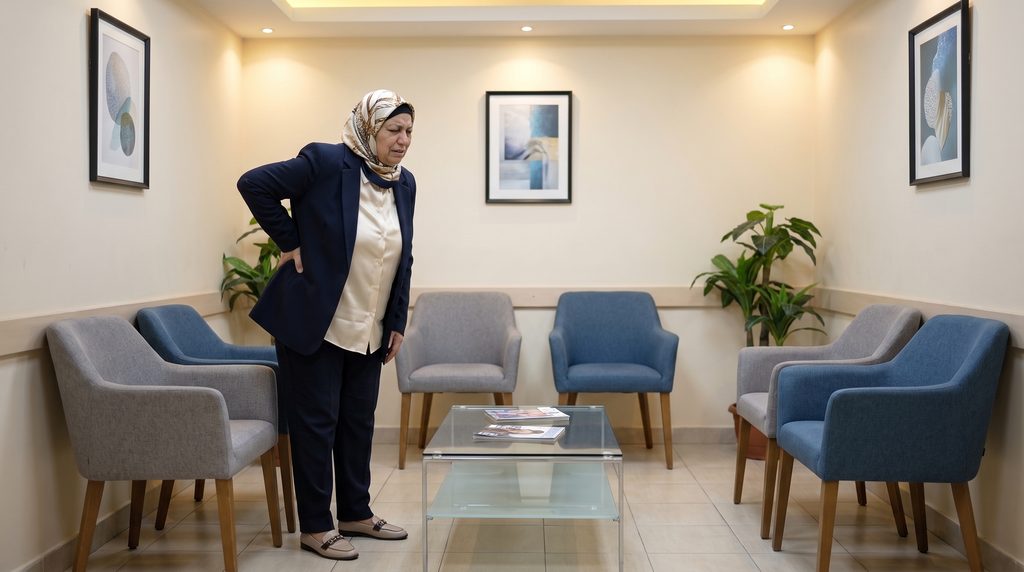
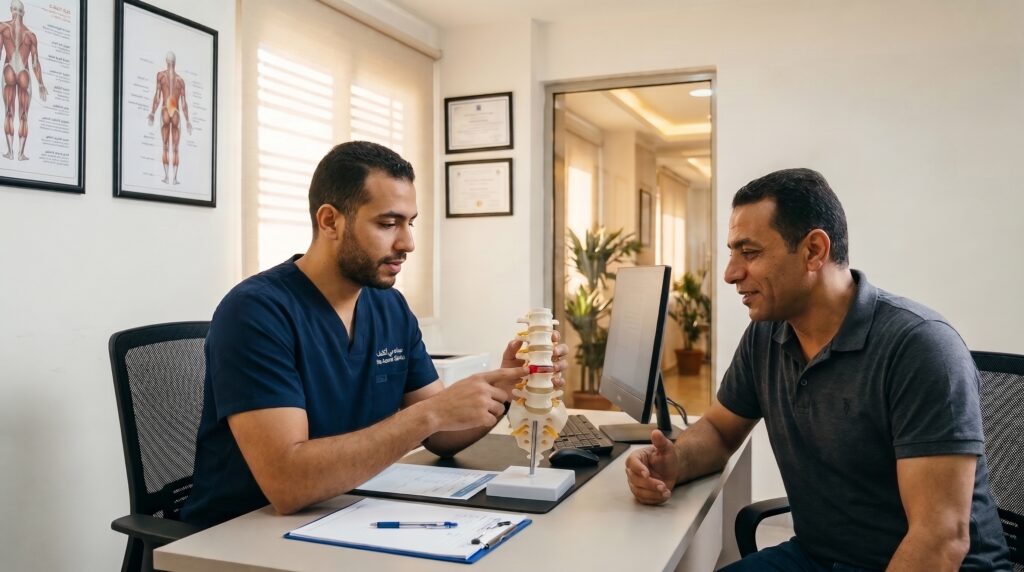
A herniated disc is one of the most common spine problems we see daily in the clinic, and it causes a lot of worry for patients because they fear their condition might inevitably require surgery.
But the truth is that most cases of herniated discs can be successfully treated without surgery. In this article, we’ll explain in detail what a herniated disc is, how it happens, and what treatment options are available.
What is a herniated disc?
The vertebrae in the spine are separated by cushions called intervertebral discs. Each disc is made up of a soft gel-like center surrounded by an outer layer of fibers.
When there’s a lot of pressure or a sudden movement, the outer layer might tear and the jelly-like core can slip out.
This slip can press on nearby nerve roots or the spinal cord itself, causing pain and other symptoms.
The difference between a bulge and a slip
It’s important to understand the difference between a disc bulge and a real slip.
In a bulge, the disc expands but the outer layer doesn’t tear.
In a slip, the outer layer tears and the gel-like core comes out.
A slip is more serious than a bulge, but both can be treated.
Causes of a herniated disc
1. Repeated mechanical stress
Repeated incorrect movements, especially those that involve bending and twisting at the same time, cause accumulated stress on the discs. People who lift heavy things every day are highly prone to this problem.
2. Bad posture and sitting for long periods
Sitting for long periods in a wrong posture constantly increases the pressure on your spinal discs.
This is especially true for people who work on computers all day.
3. Direct injuries
A car accident or a hard fall can cause an instant tear in the spinal disc.
4. Overweight
Excess weight puts a lot of pressure on the spine and cartilage discs.
5. Aging and wear
As we get older, the cartilage discs lose their flexibility and water, which makes them more prone to tearing and slipping.
6. Sudden movements
A sudden bend or sharp twist could cause an instant slip.
The main symptoms of a herniated disc
Local pain
You might feel pain in the area of the slip itself, usually in the lower back or neck.
Radiating pain to the limb
If the slip is pressing on a nerve root, you might feel pain that spreads to your leg (in cases of lumbar slip) or to your arm (in cases of cervical slip).
Numbness and tingling
You might feel strange sensations in the affected limb, like tingling or pins and needles.
Muscle weakness
In the more severe cases, you might experience weakness in the muscles served by the compressed nerve.
Numbness
You might lose feeling in certain areas of the affected limb.
Herniated disc diagnosis
Clinical examination
We do a full physical exam to check strength, sensation, and reflexes.
X-rays
A bone image is provided to rule out other bone problems.
Magnetic resonance imaging
This is the best test to clearly see the discs and nerves, and it can accurately determine the size of the slip.
Nerve conduction studies
It might help in determining how affected the nerves are.
Treatment options
1. Rest and conservative treatment
In the early stages, rest and cutting back on tough activities might be enough to give the disc a chance to heal naturally.
2. Medication treatment
Painkillers and anti-inflammatories can help ease pain and inflammation.
3. Physical therapy:
A customized exercise program aimed at:
- Strengthening the back and abdominal muscles that support the spine
- Stretching tight muscles
- Improving flexibility and movement
- Correcting posture
4. Advanced physical therapy
- Electrical therapy (TENS and EMS)
- Ultrasound therapy
- Cold laser therapy
- Therapeutic massage
5. Spinal Decompression Device:
An updated technique works on decompressing the herniated disc by applying precisely calculated traction forces.
This allows the slipped material to return to its natural place and heal.
The success rates of this technique reach 70-80% in selected cases.
6. Therapeutic injections
Steroid injections may be done locally to reduce inflammation around the nerve roots.
7. Surgical intervention
Surgery may only be necessary when:
- All conservative treatments fail over a long period (usually at least 3-6 months)
- Severe muscle weakness develops
- There are serious neurological symptoms like loss of bladder or bowel control
Stepwise Approach Strategy
In our clinic, we follow a well-known gradual approach:
- Weeks 1-2: relative rest, medications, and careful evaluation
- Weeks 3-8: intensive physical therapy program and physiotherapy treatments
- Weeks 8-12: if there’s no improvement, we move on to advanced techniques like traction devices
- After 12 weeks: if there’s still no noticeable improvement, we might consider other options in consultation with a specialized surgeon
Preventing a herniated disc
1. Correct raising
When lifting anything, bend your knees and use your legs, not your back. Keep the object close to your body.
2. The correct position
Whether sitting or standing, keep your spine aligned. Use lower back support when sitting for long periods.
3. Strengthening Exercises
Do back and abdominal strengthening exercises regularly. These muscles are the protective shield for your spine.
4. Flexibility and stretching
Don’t skip stretching and flexibility exercises. Yoga and Pilates are great options.
5. Healthy weight
Maintain a healthy weight to reduce stress on your spine.
6. Regular breaks
If you’re sitting for long periods, get up every 30-45 minutes and stretch.
7. Avoid risky moves
Avoid sudden movements and sharp twists, especially when bending.
A herniated disc is a common condition, but it’s far from a certainty that it will need surgery.
Most cases respond well to conservative, gradual treatment.
The key is early diagnosis, patience in following the treatment plan, and sticking to home exercises.
At Be Active Clinic, we have extensive experience in handling herniated disc cases efficiently.
We believe that most cases don’t require surgery and deserve organized, specialized care.
Don’t hesitate to consult us if you’re dealing with this condition.
Remember “We Keep You Moving”
our goal is to get you moving again without surgery.